
The short answer
- Wait for your concrete pro's clearance, because the curing conditions for your particular driveway determine when driving resumes.
- Moisture and temperature are curing factors identified by the American Concrete Institute, so surface appearance alone cannot settle the decision.
- Intended use matters: discuss walking, parking and deliveries separately when your concrete pro explains the access restrictions.
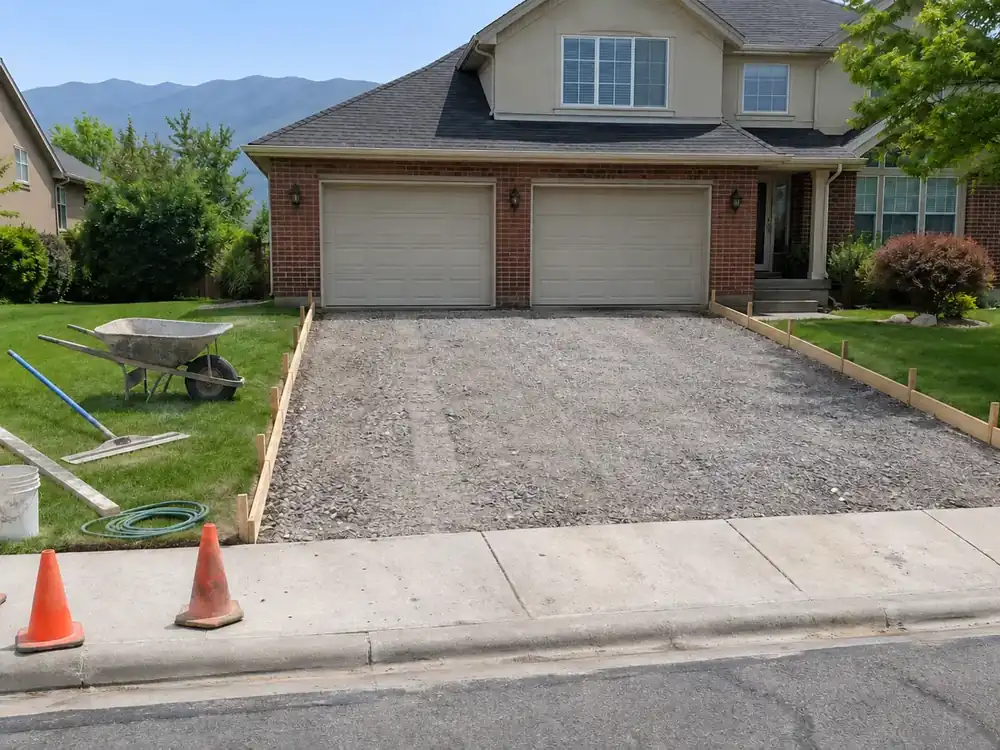
From the Forms to Everyday Access
Your concrete pro sets the household access plan around the pour and explains when each surface returns to use. Call with the driveway, patio or pad you want poured and describe the doors and gates that open onto it.
The Forms Along the House and Lawn
Forms mark the planned edges of the concrete while the work proceeds. During the site walk, point out the garage opening, the back step and any gate that swings across the proposed surface. Your concrete pro assesses the slab's height and drainage on the spot. Discuss a route between the house and the street that stays outside the work area.
The Truck at the Curb
Delivery access is planned around the street, the driveway opening and the route to the pour. Your concrete pro explains where the mixer will stand and whether a pump is part of the job. Ask how deliveries, bins and household vehicles will move while that route is occupied. Keep children and pets away from the delivery area and follow the access directions given for the work.
The Pour Inside the Forms
Fresh concrete remains within a work area that household traffic must avoid. Watch from the agreed location outside that area, and keep the alternate entrance clear for anyone coming home. Wet cement is caustic, so keep skin and eyes clear of wet concrete and promptly wash exposed skin with soap and water, following NIOSH precautions. Leave handling the concrete to the people doing the work.
The Finish Beside the Door
The finishing stage establishes the surface texture chosen for the job. A finished appearance does not reopen the route to the garage or back door. Keep the agreed barriers in place, and direct visitors to the alternate entrance. Ask your concrete pro about bringing bins, garden furniture and wheeled items back across the new surface.
The Joints Across the Surface
Concrete patio control joints remain part of the layout discussion when a stamped finish is chosen. Ask how the joint lines will relate to the doorway, patio border and adjoining walk. Your concrete pro assesses cracking questions on the spot and handles the joint work. The household's role is to keep the marked area clear while that work continues.
The Days After the Pour
Curing means maintaining moisture and temperature conditions so the cement's chemical reactions can continue, as the American Concrete Institute describes. Concrete driveway drying time is therefore a different question from permission to drive: a dry-looking surface is not a clearance signal. Your concrete pro decides how long to stay off new concrete for the conditions at the job.
The American Cement Association describes curing as supporting continued hardening after placement. Leave any protection arranged by your concrete pro undisturbed. Keep pets behind a closed door or gate away from the pour, supervise children near the alternate route, and tell visitors which entrance to use.
| Household use | What to settle with your concrete pro |
|---|---|
| Front-door access | The walking route around the protected concrete |
| Garage parking | Clearance to bring vehicles back onto the driveway |
| Patio furniture | Permission to return chairs, tables and wheeled items |
| Deliveries | A drop-off point outside the restricted surface |
Concrete driveway time to cure depends on the job's curing conditions; request clear directions for each intended use. One of our local concrete partners will explain the access arrangements and the scope and price before work begins. For the driveway work itself, see concrete driveway installation and replacement.