
The short answer
- Salt can damage concrete surfaces; USU Extension identifies rock salt as a cause of pitting.
- New concrete needs particular winter care, with deicer avoidance included in industry guidance for the initial winter.
- Wet edges and recurring puddles need assessment on the spot by your concrete pro, rather than a diagnosis based only on salt use.
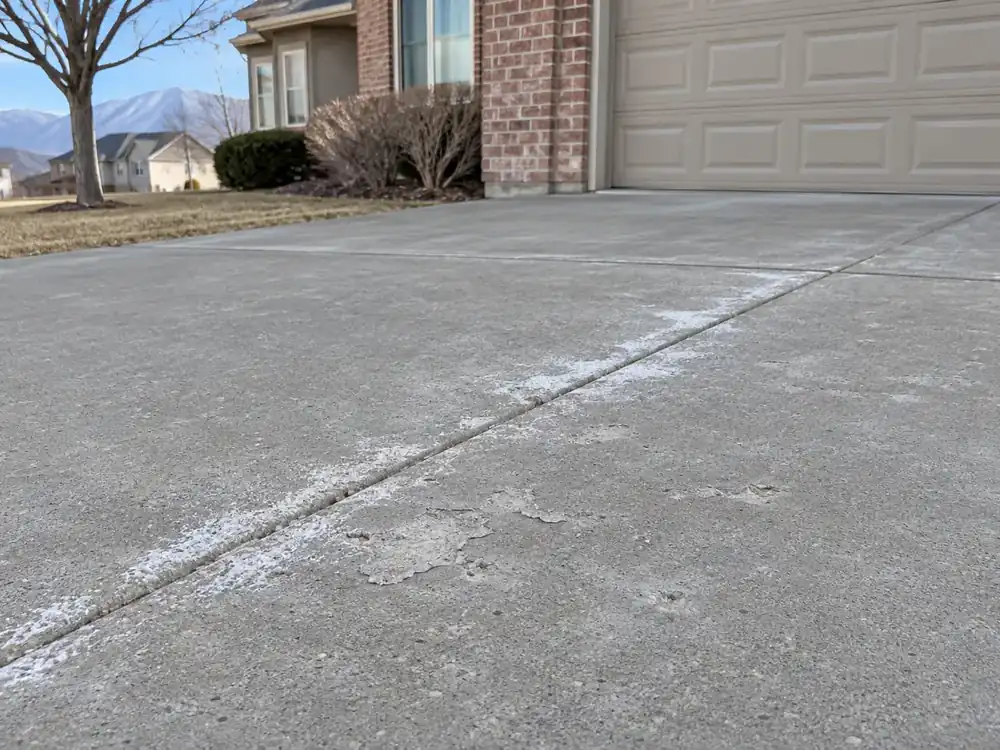
Winter Exposure Along the Slab Edges
Salt exposure, repeated freezing and persistent moisture belong in the same flatwork conversation. Along the Wasatch Front, discuss winter concrete damage by describing the driveway, walk or patio edge that has changed. Call while the concern is fresh; a description of flakes, pits or a recurring wet area helps explain what needs assessment.
The Driveway Surface and Salt
Deicers can harm a concrete surface, and changing products does not automatically settle the concern. USU Extension identifies pitting from rock salt and warns that calcium chloride and magnesium chloride can damage concrete. Share the product name during the call if you know it. Avoid assuming that a bag's general winter use makes it suitable for the particular surface.
New flatwork needs its own care plan. Industry guidance for concrete's initial winter calls for avoiding deicing salts and preventing snow and ice accumulation. Ask the pro who pours how the proposed surface will be protected and what written care directions will follow. Existing and newly placed panels should be identified separately when discussing winter use.
The Garage Wall and Wet Edge
Repeated freezing of moist concrete can cause deterioration, as described in federal pavement research. A wet strip at a garage door deserves attention even when the rest of the drive looks dry. Describe when water appears and whether it remains near a joint, the wall or the sidewalk crossing.
Water on or beneath a slab raises a site-specific question; your concrete pro assesses it on the spot. A photograph of a puddle cannot establish what is happening below the surface. The assessment should connect the observed water to the slab edges and proposed work without assuming salt alone explains the condition.
The Walkway and Lawn Border
Snow clearing should be part of surface care rather than relying on heavier chemical use. USU Extension favors sparing deicer use and physical snow removal. Ask how to clear the particular finish and handle snow near the walk's edge. For a damaged panel or uneven joint, your concrete pro assesses the condition on the spot before recommending repair or replacement.
Describe the boundary of the affected area during the call. A rough driveway panel, a flaking step edge and a worn patio corner can lead to different scopes. Discuss whether the adjoining surface stays and how the finished edge would look beside it. The concrete repair and replacement service covers those flatwork discussions.
The Pour and Its Winter Protection
Cold weather requires a protection plan for newly placed concrete; industry cold weather guidance describes protection against freezing as part of placement and curing. Ask how forecast conditions affect the proposed pour, how the surface will be protected and when the intended use will be appropriate. The pour day and curing discussion helps frame those questions without setting a universal calendar promise.
The Street and Work Truck
Snow parking restrictions belong in the access plan for concrete work. Bluffdale bans street parking during a snowstorm and for forty-eight hours afterward, while Murray prohibits leaving a motor vehicle on a street beginning one hour after snowfall starts until snow removal on that street is complete. Those are different triggers, so the work plan must use the rule for the actual address. Need concrete service near your home in Draper, UT? Call about the affected edge; one of our local concrete partners will discuss the scope and price ahead of any work.